Google Unveils Geospatial Reasoning Agent
Google Research has expanded access to its experimental Geospatial Reasoning agent, an AI tool designed to execute complex planet-scale analysis and spatial predictions.

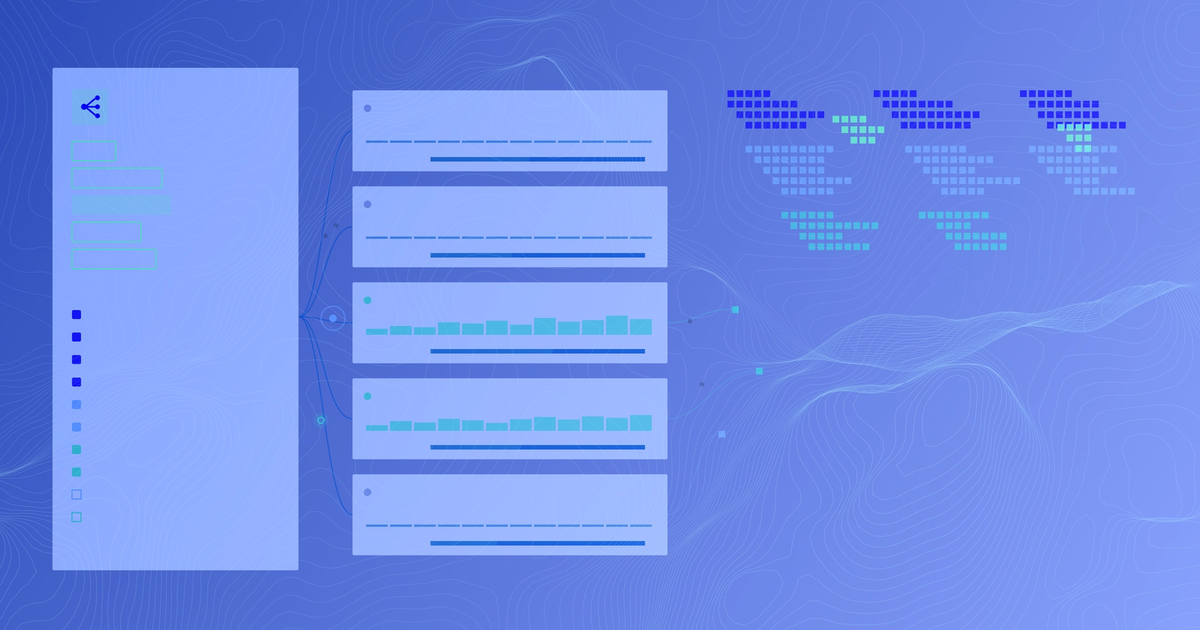
Google Research has detailed its Geospatial Reasoning agent, an advanced system that connects Gemini models—tested on Gemini 3.8 Flash and Gemini 3.1 Pro—with specialized planetary foundation models. These domain tools include WeatherNext (and WeatherNext 3), Flood Forecasting, the Population Dynamics Foundation Model (PDFM), AlphaEarth Foundations, and Remote Sensing Foundations. Supported by Google Maps Platform, Google Earth Engine, Data Commons, and Google Dataset Search, the agent structures multi-step analytical plans in a dedicated workspace. To test spatial capabilities, Google evaluated the system on CBGB, UnivEARTH, and two new benchmarks it is releasing to researchers: GeoKTools and GeoExpertQueries.
Beyond basic query responses, the architecture powers Google's Planetary Prediction Engine by combining Population Dynamics Insights and Custom Satellite Embeddings. In public health research, fusing these signals improved prediction accuracy for health outcomes by 12% over demographic baselines while rendering map outputs at 8X finer spatial resolution. The evaluation revealed that while standalone LLMs reached 93.6% on UnivEARTH due to web-indexed answers, they failed on complex spatial workflows that required the specialized tools evaluated in GeoKTools and GeoExpertQueries.
Partner deployments demonstrate significant operational time savings. During an Ebola outbreak in the Democratic Republic of the Congo, WHO AFRO and DRC’s INRB used the agent to identify 48 exposed settlements and 45,500 at-risk individuals in minutes. Disaster relief organization People in Need evaluated 14 historical cyclone paths, GiveDirectly assessed damage from Tropical Cyclone Maila and Mississippi tornadoes, and the Milken Institute screened over 1,500 candidate buildings for resilience hubs using the Solar API. WPP also integrated the system to enhance privacy-preserving geospatial marketing.
For practitioners, the setup streamlines spatial workflows by allowing users to import private data as CSV files, GeoJSON boundaries, or cloud tables. Google is opening expanded preview access through an interactive deep research feature in Ask Google Earth, an experimental Agent-to-Agent (A2A) API for developer integrations, and direct access to the Planetary Prediction Engine.
This is our own summary of reporting by Google Research