Leash Bio Launches Minos to Train AI Chemistry Agents
Leash Bio has released Minos, an open dataset and environment offering tens of thousands of simulated lab experiments to train AI agents in chemical reasoning.
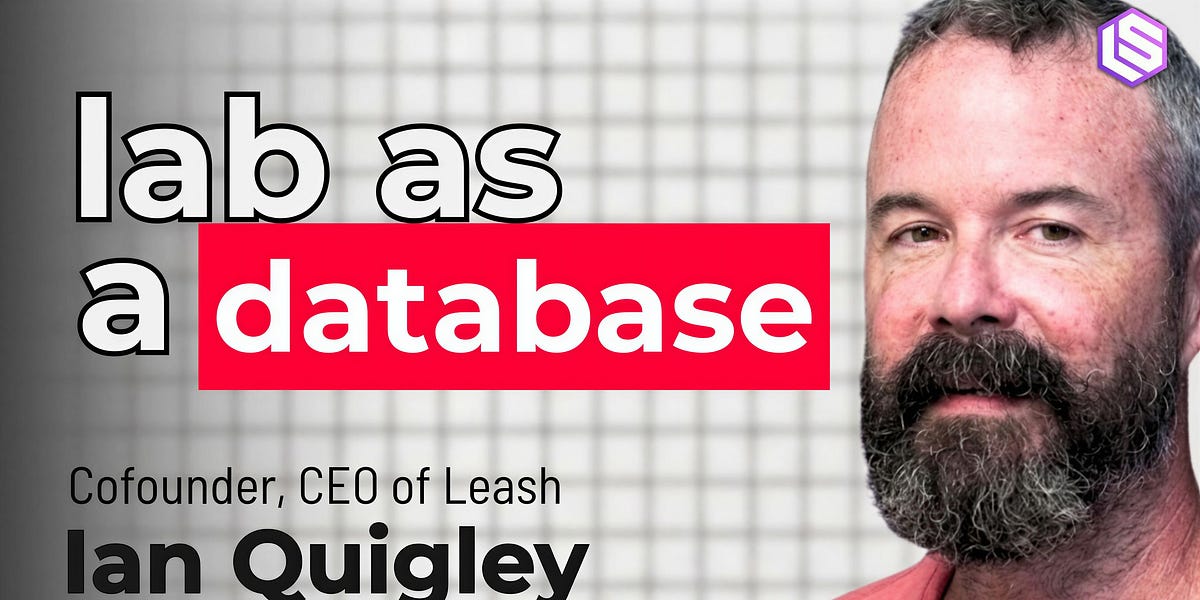
Leash Bio has released a preprint, blog post, and open dataset for Minos, an interactive playground designed to train AI agents using scientific reinforcement learning. The platform leverages high-throughput DNA Encoded Libraries, a technique that maps interactions between small molecules and proteins via Next Generation Sequencing. To refine this notoriously noisy process, Leash attached dozens of DNA barcodes to every single molecule, catching false positives where proteins bound to the DNA barcode rather than the candidate drug.
The release builds on years of empirical data collection, including a Kaggle competition involving roughly 4 billion measurements and 2,000 competing teams. Remarkably, no team outperformed random chance when evaluated on an unseen chemical library. This highlighted widespread shortcuts in computational chemistry, where models often identify a molecule's chemist rather than learning physical binding principles. In response, Leash created Hermes, a model trained strictly on proprietary data that performs on par with Boltz on public benchmarks. When Leash discovered Hermes was memorizing protein nicknames, they engineered mutant protein pockets at scale to eliminate the bias.
With Minos, this dataset serves as an environment for AI agents to evaluate structure-activity relationships in plain English. Models attempt to locate the strongest binding candidates across 6.5 million molecules while operating on a strict budget of 100 simulated tests. For bio-AI engineers, this provides tens of thousands of verifiable lab-in-the-loop simulations without spending real laboratory capital. Leash has already applied its high-throughput pipeline internally, moving from an initial assay hit to solid mouse pharmacokinetic and pharmacodynamic results in six months on an inflammation program.
This is our own summary of reporting by Latent Space