Databricks Brings Spatial SQL to Real-Time Lakehouse
Databricks has added spatial SQL and spatial joins to its Lakehouse//RT warehouse in Beta, offering massive speedups for real-time location-based analytics without separate data stacks.
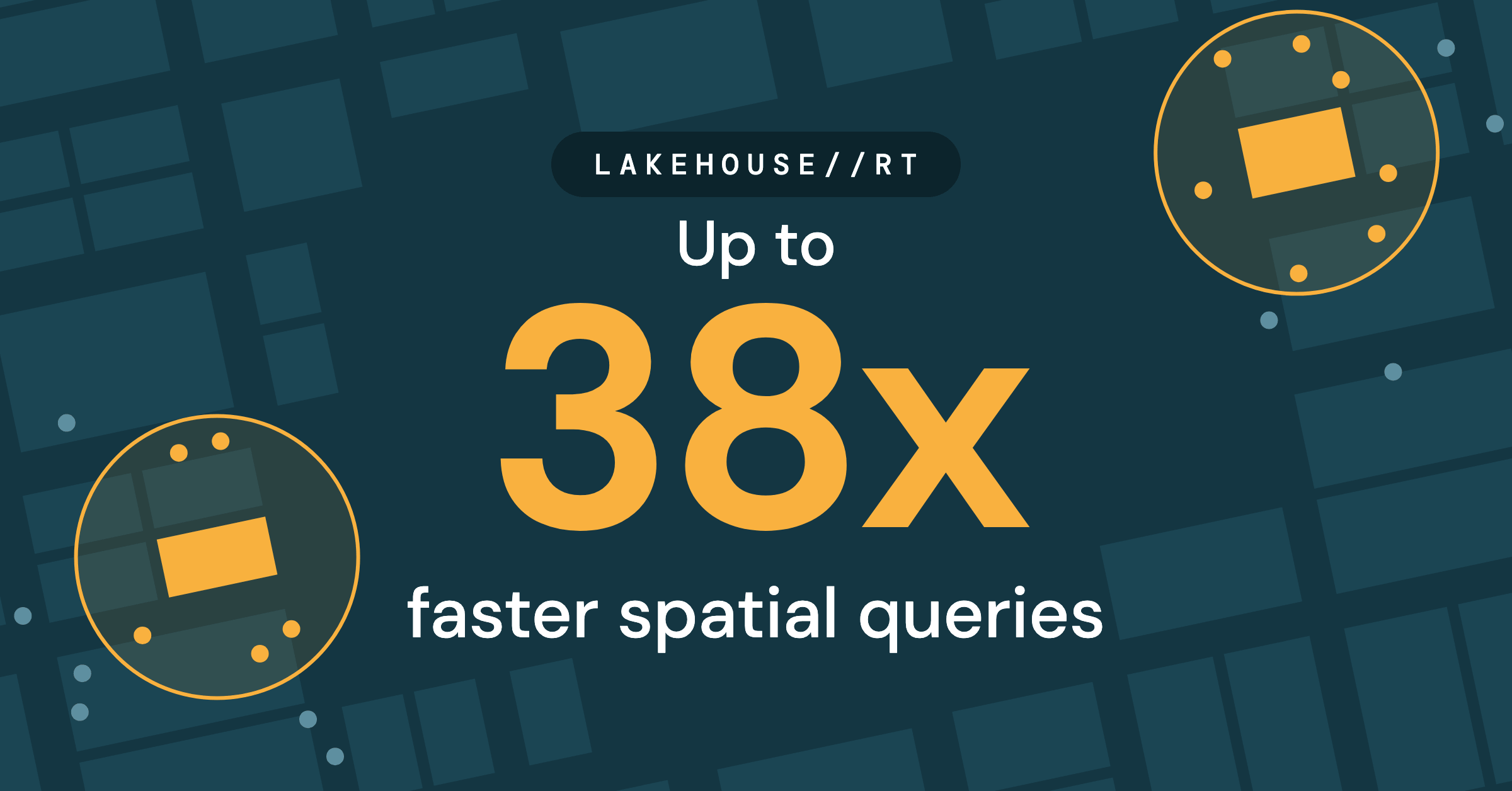
Databricks has expanded its real-time data warehouse service, Lakehouse//RT, by adding support for Spatial SQL and spatial joins in Beta. Built to deliver millisecond query performance directly on governed lakehouse data, the engine allows teams to run location-based workloads without exporting data to external databases like PostGIS or dedicated serving layers. Benchmarked against a traditional cloud data warehouse using SpatialBench, Lakehouse//RT performed 3X faster on average and up to 20X faster for single queries. When tested under heavy load with 50 concurrent users, performance increased to up to 38X faster. Even when excluding the single most improved query, the platform maintained an average speedup of over 3.5X.
The platform natively supports GEOMETRY and GEOGRAPHY data types, which are integrated into the open lakehouse framework, Apache Spark, and Parquet files used by Delta and Iceberg v3. Users gain access to a library of over 100 spatial functions alongside H3 grid system expressions and AI/BI mapping tools. Originally introduced at Data + AI Summit 2026, Lakehouse//RT handles latency as low as 10ms and scales concurrency to 12,000 queries per second. Databricks positions the system alongside its other architectural pillars, which include the core Lakehouse for long-running spatial OLAP, Lakebase for spatial OLTP, and Databricks Apps.
For data practitioners, the update eliminates the operational overhead of managing synchronization pipelines and duplicate datasets across fragmented architectures. Queries previously executed on SQL Serverless can run on Lakehouse//RT with zero code changes or new licensing requirements, provided developers replace calls like ST_GeomFromWKB with native GEOMETRY types to enable query optimizations and file-skipping. This setup simplifies location analytics across industries, from real-time order routing in logistics to threat boundary mapping in security operations.
This is our own summary of reporting by Databricks AI



