OpenAI and Anthropic Outline Financial AI Agent Controls
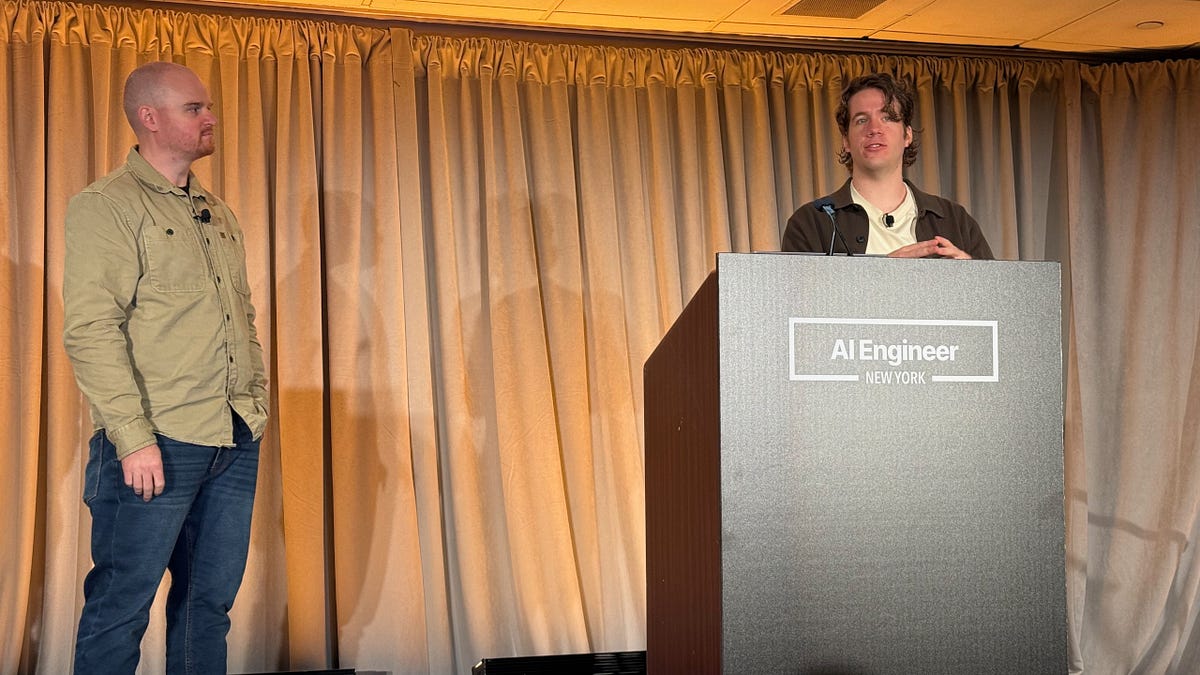
AI leaders from OpenAI and Anthropic detailed strategies at AI Engineer New York to give financial agents practical autonomy while enforcing strict safety boundaries outside the model.
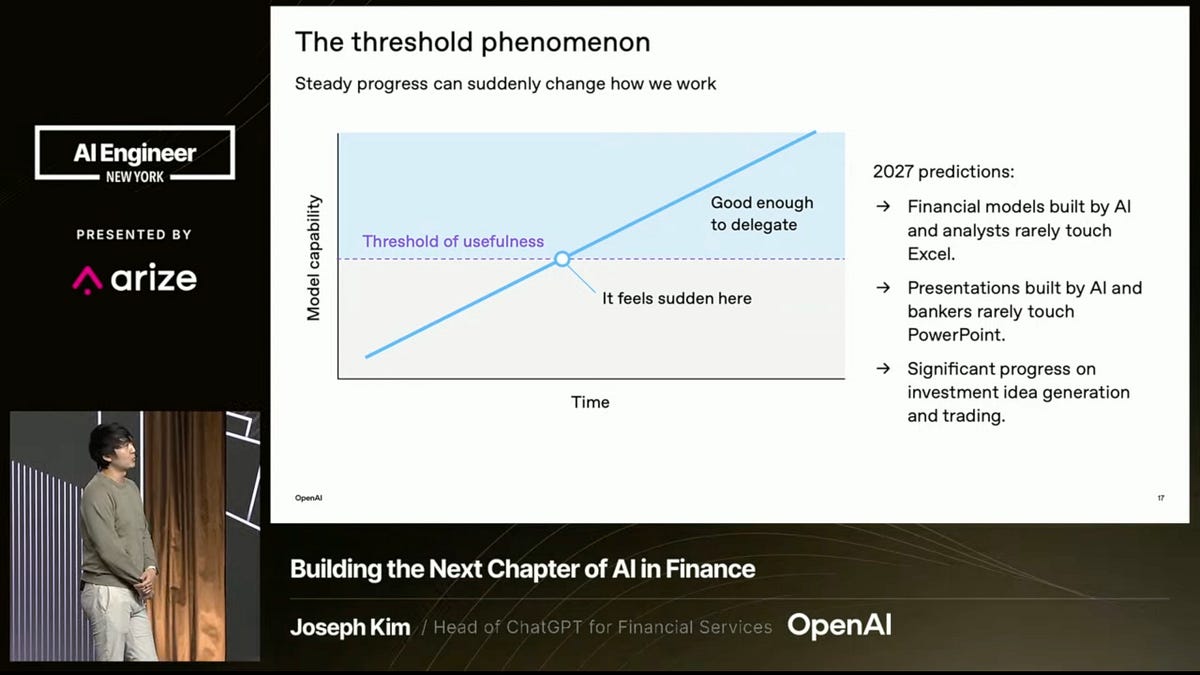
Frontier AI providers and major financial institutions outlined new execution models for autonomous financial software at this week's AI Engineer New York conference. Joseph Kim, Head of ChatGPT for Financial Services at OpenAI, highlighted a critical threshold of usefulness where systems become reliable enough to save user time. Kim predicted that by 2027, the financial industry will significantly cut its dependence on Excel and PowerPoint as AI agents take over core tasks like investment idea generation and trading, provided firms design review mechanisms directly into the user interface.
Anthropic echoed this paradigm shift following its recent rollout of Claude for Financial Advisors. Belinda Neal, Managing Director of Financial Services at Anthropic, and applied AI specialist Keon Shahab explained that building safe financial automation requires a dedicated trust layer. This architecture relies on explicit identity and permission systems, sandboxed approval environments, and clear boundaries between recommending an action—such as proposing trade order amendments—and executing it.
To prevent workflow bottlenecks like approval fatigue, John Feminella, SVP Architecture at hedge fund Two Sigma, detailed the firm's use of composable guardrails alongside automated classifiers that process routine calls while escalating high-risk decisions to human managers. Meanwhile, Andrey Rybka, Head of Architecture and Emerging Technologies at Bloomberg, advocated for enforcing security strictly outside the model. Rybka warned of real-world risks like prompt injection attacks and recommended deterministic safeguards, including scoped credentials, tool-call monitoring, outbound traffic limits, audit logs, financial budgets, and system kill switches.
For developers and financial engineers, these frameworks mark a shift away from restrictive prompt engineering toward external runtime controls. Rather than bottlenecking deployment with manual sign-offs for every transaction, engineering teams can pair capable models with deterministic external barriers to safely scale high-speed autonomous operations.
This is our own summary of reporting by Latent Space